 CLEANMIST
Centralised ducted extraction vs per-machine mist collectors
One shared collector pulling from a row of machines, or a unit on every machine? Neither is automatically better - the machine list, fluids, layout and working pattern decide it. Share those and the arrangement can be checked for your shop.
What decides the arrangement
Per-machine extraction fits shops where machines differ - different fluids, different shift patterns, machines spread across the floor, or a plan to start with the worst machine and add units later. A shared ducted arrangement fits a row of similar machines running the same fluid on the same pattern. Most shops end up comparing the two on four things: how many machines and how far apart they are, what fluid each machine runs, when the machines actually run, and how cleaning and maintenance fit the shifts.
A collector on every machine
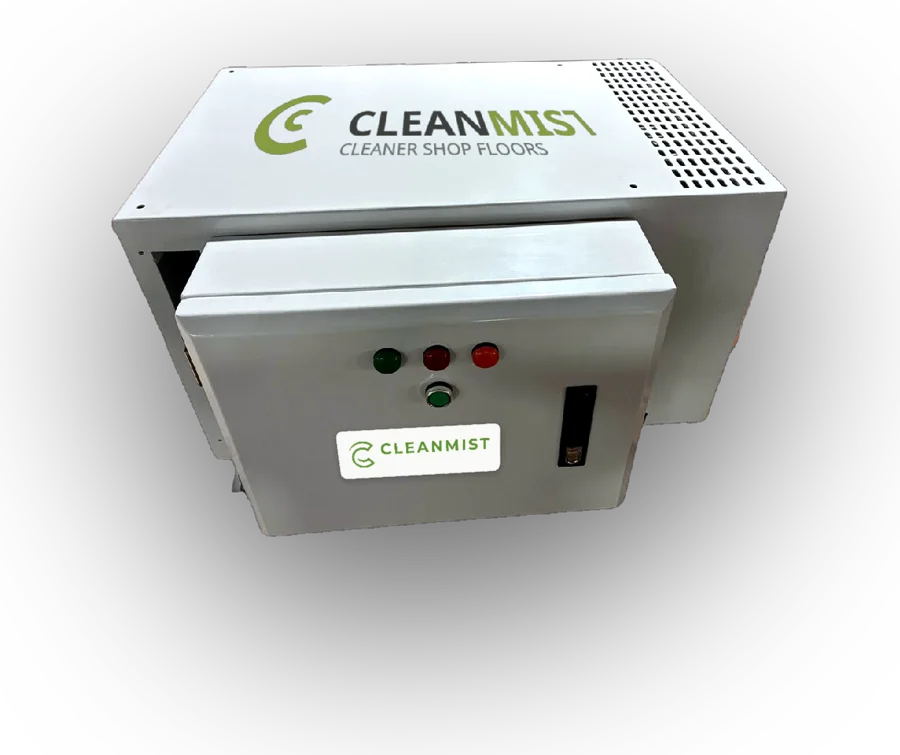
Per-machine units mount on or beside the machine tool and draw mist straight from the enclosure before it reaches the operator's breathing zone. The Cleanmist CM series covers oil and emulsion coolant mist at 600-2000 CMH (CM600 to CM2000, 100-260 W, 230 V), and the ESP series covers neat-oil mist and smoke at 1000-2000 CMH per machine (ESP1000 and ESP2000). These are brochure collector ratings, not confirmed airflow requirements for any specific machine.
Where it fits
Machines on different fluids or duty cycles, machines spread across the shop, and shops that want to start with one or two problem machines and extend later.
Independent running
Each unit runs with its own machine, so maintenance or a stopped unit affects one machine, not the row.
No ducting to plan
The unit sits at the machine, so there is no duct route to design, install or keep clear.
Matched to each duty
Emulsion-mist machines take CM units and neat-oil or smoke duties take ESP units, each sized to its own enclosure.
One shared ducted collector
The ESP series brochure describes the range as covering everything from a single turning center to large machining centers and centralized extraction, with machine-mount, stand-mount or ducted installation. The ESP4000 (rated 4000 CMH, 770 W, 220-240 V single-phase) is listed for big enclosures, multiple machines or centralized ducted extraction, with washable collecting cells and 99% filtration efficiency.
Where it fits
A row of similar machines on the same fluid and working pattern - for example a line of turning centers or headers running together through the shift.
Ducting has to be planned
Duct runs add resistance. The ESP series is rated at 100 Pa static pressure and the brochure notes pressure behaviour depends on system configuration, so routes, lengths and pickup points need to be worked out from the layout, not assumed.
One maintenance point
One set of washable cells to clean instead of many - but while the shared unit is being washed, the connected machines have no extraction, so cleaning fits around shift breaks.
Recovered oil in one place
Electrostatic collection drains the captured oil to one sump for handling per your shop's practice, instead of collecting at every machine.
What to send us before choosing
Machine list
Make and model of each machine, what fluid it runs (water-mix coolant or neat oil), and whether it is open or enclosed.
Layout
Photos of the machines and the space above and beside them, machine spacing, and where a duct could run.
Working pattern
Which machines run together, hours per day, and when shifts change or machines stop for setup.
Existing extraction
Any units or ducting already in place, and what is not working about them.
Common questions about centralised and per-machine extraction
Can one mist collector serve several machines?
It can when airflow and ducting are planned for the combined duty. The Cleanmist ESP4000 brochure rating covers big enclosures, multiple machines and centralized ducted extraction. Share your machine list and layout so the arrangement can be checked.
Which arrangement uses less power?
The brochure power draws are per unit: CM series 100-260 W across CM600 to CM2000, ESP series 250-770 W across ESP1000 to ESP4000. Total draw depends on how many units the shop runs and when they run, so share your working pattern and the comparison can be worked through for your machines.
Can coolant-mist machines and neat-oil machines share one duct?
Water-mix coolant produces emulsion mist while neat oil produces finer oil smoke, and the two duties are filtered differently. List what fluid each machine runs so the arrangement can be checked before anything is shared on one duct run.
Does a long duct run affect the collector?
Yes. Ducting adds resistance, and the ESP series is rated at 100 Pa static pressure; the brochure notes pressure behaviour depends on system configuration. Duct routes should be planned rather than assumed - send your layout with machine positions.
What happens to the row when a shared collector is cleaned?
ESP collecting cells are washed and reused, but while the shared unit is being washed the connected machines have no extraction, so cleaning is best planned around shift breaks. Per-machine units can be cleaned one at a time while the rest of the shop keeps running.
Send your machine list and layout
Share your machines, fluids and working pattern. We will review the layout before recommending per-machine units or a shared ducted arrangement.
WhatsApp my shop detailsProduct specifications and application coverage from the Cleanmist CM and ESP series brochures. Updated 11 November 2026.