 CLEANMIST
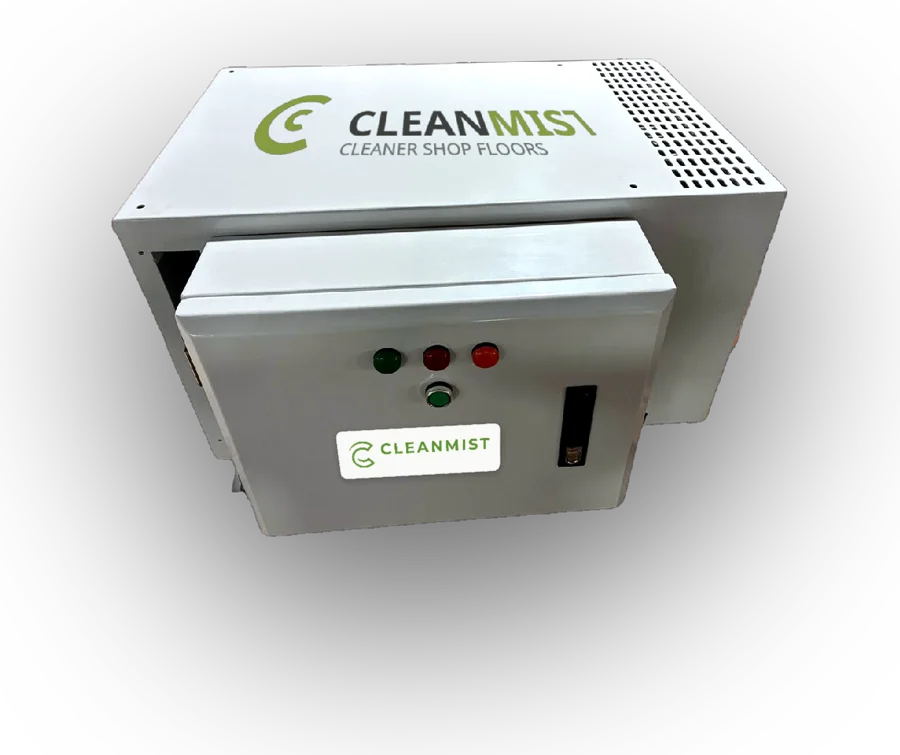
Grinding smoke and oil mist extraction
CNC grinding on neat oil produces fine oil smoke that spreads through the shop if it is not captured at the machine. Share your grinder, fluid and layout so the extraction can be matched to the application.
Grinding smoke is an oil-mist problem
Grinding with neat oil heats the fluid at the contact point and releases fine oil smoke. IARC classifies untreated and mildly-treated mineral oils as carcinogenic to humans (Group 1); highly-refined mineral oils are not classifiable as to their carcinogenicity (Group 3). Regardless of where your oil sits, fine smoke in the breathing zone is an exposure worth capturing at the machine, before it spreads to the operator and settles on shop surfaces. Once smoke escapes the enclosure it settles as an oily film on machines, floors and lights.
Know your grinding duty
Neat-oil grinding
Tool, cutter and precision grinding on straight oil produces the heaviest smoke. The Cleanmist ESP series brochure lists grinding smoke among its applications; electrostatic cells capture the fine oil particles and drain the recovered oil.
Emulsion grinding
Water-mix coolant produces mist rather than smoke. The CM series brochure lists oil and emulsion mist duty, so emulsion grinding mist sits in CM territory.
Dry grinding
Dry grinding creates dust, not oil smoke - a different extraction duty. Send your process details before choosing; do not assume an oil-mist unit suits dry dust.
Mixed shops
Many shops run grinders beside turning or honing. List every machine and fluid; the extraction plan should cover each duty correctly rather than copying one unit everywhere.
Per-machine or centralised?
The ESP series covers ESP1000 (rated 1000-1500 CMH, 250 W), ESP2000 (2000 CMH, 430 W) and ESP4000 (4000 CMH, 770 W), on a 220-240 V single-phase supply with 99% filtration efficiency. These are collector ratings from the brochure, not confirmed airflow requirements for any specific grinder.
Per-machine units
One ESP mounted on or beside each grinder suits shops with a few machines or machines that run different patterns. Simpler ducting, independent operation.
Centralised systems
Several grinders on similar shifts can share a ducted centralised ESP arrangement. Duct routing, airflow balance and maintenance access need planning - send the layout.
Washable cells
ESP collecting cells are washed and reused; the standard configuration uses no disposable filter media. An optional HEPA after-filter is a separate replaceable element.
Recovered oil
Electrostatic collection drains the captured oil for disposal or handling per your shop's practice, instead of loading it into throwaway media.
What to send us before choosing
Machine and process
Grinder type and make (surface, tool and cutter, cylindrical), the grinding operation, and whether the work zone is enclosed or open.
Fluid
Neat oil, emulsion or dry. For oil, the product name or safety data sheet helps confirm the duty.
Machines and pattern
How many grinders run, how many at the same time, and hours per shift. This decides per-machine versus centralised sizing.
Layout
Machine positions, available space above or beside each machine, and any existing extraction or ducting.
Common questions about grinding smoke extraction
Are the electrostatic cells washable or disposable?
The ESP collecting cells are washable and reused; the standard configuration uses no disposable filter media. An optional HEPA after-filter is available and is a separate replaceable element.
Does the ESP handle dry grinding dust?
The ESP brochure lists grinding smoke among its applications, which refers to oil-based grinding. Dry grinding dust is a different duty - send your process details and we will advise on the dust collection options.
Can one ESP serve more than one grinding machine?
It can, when the ducting and airflow are planned for the combined duty. Share the machine list, positions and working pattern and the arrangement can be checked before you decide.
What power supply does the ESP series need?
The ESP series runs on a 220-240 V single-phase supply.
What should I send first for a grinding application?
Your grinder type and make, the fluid used (neat oil, emulsion or dry), whether the work zone is enclosed, the number of machines and the shift pattern.
Send your grinding setup
Share your grinder, fluid and machine list. We will review the application before recommending a per-machine unit or a centralised system.
WhatsApp my grinding detailsHealth classification: IARC classifications - mineral oils, untreated or mildly treated (Group 1) and highly-refined (Group 3). Product specifications from the Cleanmist ESP series brochure. Updated 1 November 2026 (corrected 1 November: IARC classification scope clarified).