 CLEANMIST
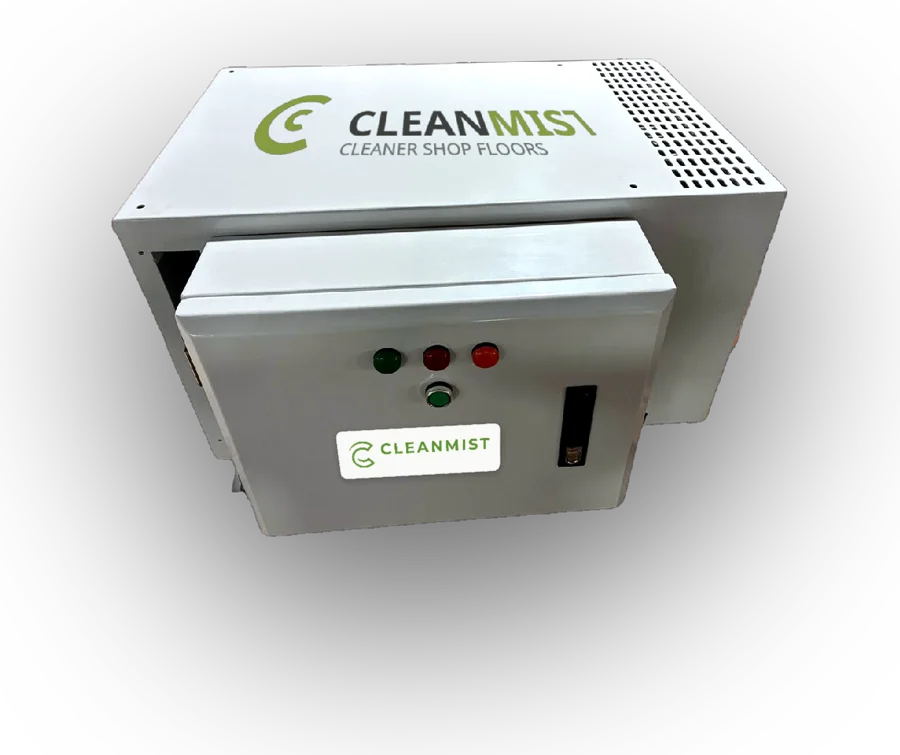
EDM oil smoke and mist extraction
Die-sinking EDM releases oil smoke from its dielectric fluid, especially when the tank opens after a cycle. Share your EDM type, fluid and layout so extraction can be matched to the machine.
EDM smoke escapes when the tank opens
Die-sinking EDM sparks inside a hydrocarbon dielectric oil, and each cycle leaves oil smoke hanging in the tank. Most of it escapes in one burst when the operator lifts the workhead or opens the tank to change the job. Without capture at the tank, that smoke reaches the operator's breathing zone and settles as an oily film across the machine and the shop.
Die-sinking and wire EDM are different duties
Die-sinking EDM
Works in hydrocarbon dielectric oil and produces oil smoke. The Cleanmist ESP series brochure lists EDM among its applications; electrostatic cells capture the fine oil particles and drain the recovered oil.
Wire-cut EDM
Works in deionised water, so its emission is mostly water mist, not oil smoke. A lighter duty - but discuss it before choosing, because extraction sized for oil smoke is not automatically the right answer for water mist.
Mixed EDM shops
Toolrooms often run both types side by side. List each machine separately; the extraction plan should match each duty rather than copying one unit across the shop.
Adjacent processes
EDM cells often sit beside grinding or machining. Smoke from a neighbour's process loads your collector too - mention nearby machines when you send details.
Choosing the extraction arrangement
The ESP series covers ESP1000 (rated 1000-1500 CMH, 250 W), ESP2000 (2000 CMH, 430 W) and ESP4000 (4000 CMH, 770 W), on a 220-240 V single-phase supply with 99% filtration efficiency. These are collector ratings from the brochure, not confirmed airflow requirements for any specific EDM machine.
At the tank
A pickup arranged at the tank edge or above the work zone captures smoke where it escapes. Send a photo of the tank area and the space above and beside the machine.
Per-machine or shared
One ESP per machine suits machines on different cycles. Two machines on similar patterns can share a ducted arrangement when airflow is planned for the combined duty.
Washable cells
ESP collecting cells are washed and reused; the standard configuration uses no disposable filter media. An optional HEPA after-filter is a separate replaceable element.
Recovered oil
Electrostatic collection drains the captured oil for handling per your shop's practice, instead of loading it into throwaway media.
What to send us before choosing
EDM type and machine
Die-sinking or wire-cut, the machine make and model, and whether the work zone is open or enclosed.
Dielectric fluid
The oil brand or product name for die-sinking machines; the safety data sheet helps confirm the duty.
Tank and layout
Tank size, a photo of the tank area, machine positions, and any existing extraction or ducting.
Working pattern
Hours per day, cycles per shift, and how long the tank stays open between jobs.
Common questions about EDM smoke extraction
Does wire-cut EDM need the same extraction as die-sinking EDM?
No. Wire-cut EDM works in deionised water, so its emission is mostly water mist. Die-sinking EDM works in hydrocarbon dielectric oil and produces oil smoke. Tell us which process you run before choosing a unit.
Are the ESP collecting cells washable?
Yes. The ESP cells are washed and reused; the standard configuration uses no disposable filter media. An optional HEPA after-filter is a separate replaceable element.
Should extraction run only while the EDM tank is open?
Capture is most needed when the tank or work area is opened after a cycle, when trapped smoke escapes. Extraction arranged at the tank edge or enclosure covers both during-cycle leakage and door-open release.
Can one ESP serve two EDM machines?
It can when ducting and airflow are planned for the combined duty. Share both machine models, their positions and their working pattern and the arrangement can be checked.
What should I send first for an EDM application?
Your EDM type (die-sinking or wire-cut), machine make and model, dielectric fluid, tank size and a photo of the tank area, plus how many hours per day the machine runs.
Send your EDM setup
Share your EDM type, machine and dielectric fluid. We will review the application before recommending a unit or arrangement.
WhatsApp my EDM detailsProduct specifications from the Cleanmist ESP series brochure. Updated 3 November 2026.